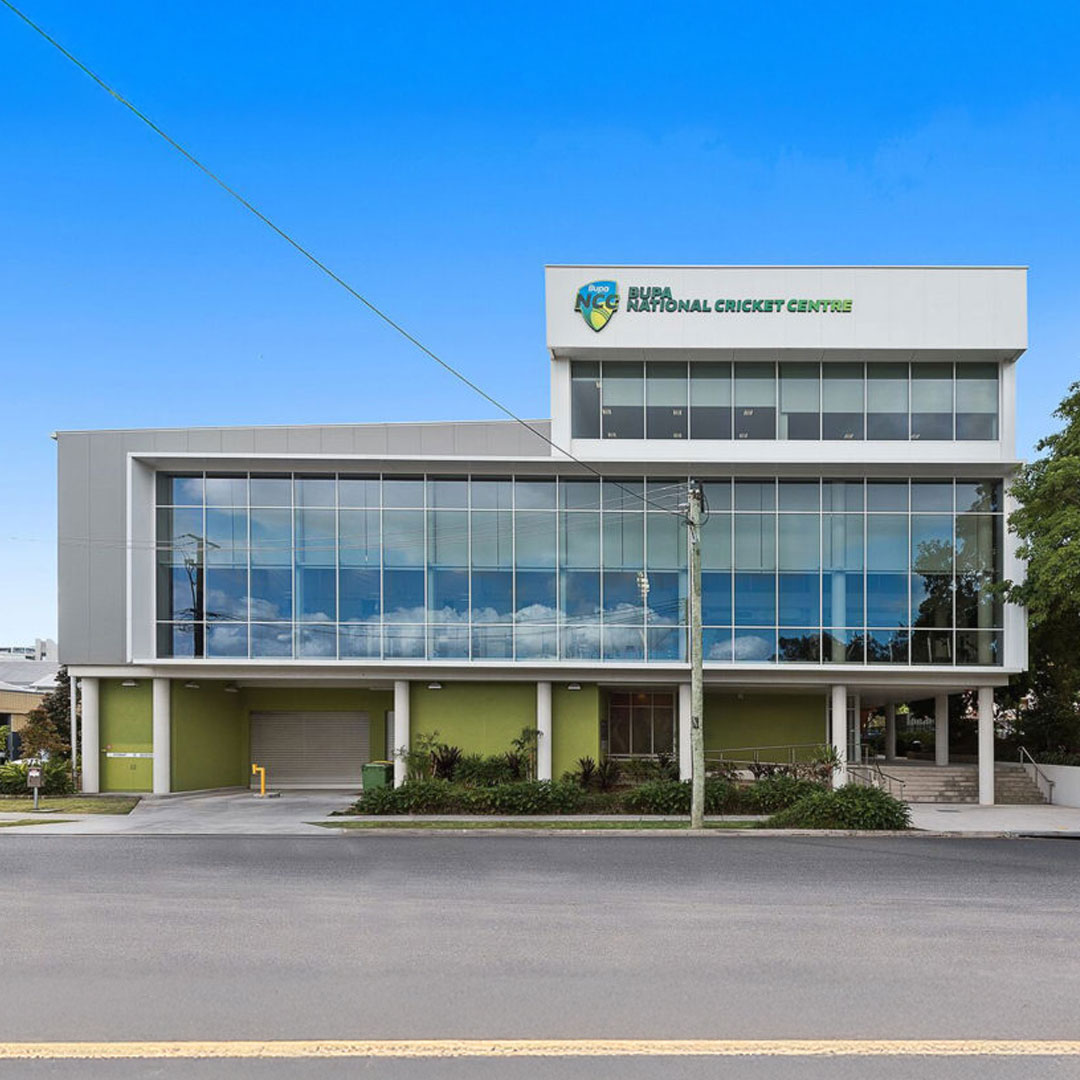
Client Name: Bupa National Cricket Club
Location: Albion, QLD
Fire Boar successfully delivered and commissioned a “Thermal Imaging (infrared) Flame Detection camera at Bupa National Cricket Club’s rooftop plant room.
Before installation, a Factory Acceptance Test (FAT) was conducted in our training room to validate system programming and operation. During the onsite assessment, it was determined that the existing doorway structure was unsuitable for long-term mounting. In collaboration with our Project Management Team, a durable pole mount was sourced and installed.
The camera was integrated with the existing fire indicator panel via a low-level interface, with Fire Boar’s engineers setting an optimal alarm trigger temperature of 90°C—balancing sensitivity with Queensland’s environmental conditions.
Final commissioning involved a controlled heat test using a heat gun to simulate high temperatures, ensuring the system functioned as intended.
What is a Thermal Imaging (Infrared) Flame Detection Camera
A Thermal Imaging (Infrared) Flame Detection Camera is a specialized device that uses infrared (IR) technology to detect heat signatures and flames in industrial, commercial, and hazardous environments. Unlike traditional smoke or heat detectors, which rely on rising smoke or ambient temperature changes, these cameras identify flames and hotspots by analyzing infrared radiation emitted by objects.
How It Works:
- Infrared Sensing: The camera captures thermal radiation (heat) rather than visible light, allowing it to detect fire even in dark or smoky conditions.
- Flame Recognition: Advanced algorithms differentiate between actual flames and other heat sources, reducing false alarms.
- Temperature Monitoring: Some models can measure surface temperatures and trigger alarms if predefined thresholds are exceeded.
- Integration with Fire Safety Systems: These cameras can connect to fire alarm systems or control panels to trigger automated responses like suppression systems or alerts.
Common Applications:
- Industrial Facilities (factories, refineries, power plants)
- Storage Areas (warehouses, chemical storage)
- Critical Infrastructure (airports, tunnels, data centers)
- Remote or High-Risk Locations (offshore platforms, mining sites)
By using infrared imaging, these cameras provide early fire detection, reduced false alarms, and improved safety in environments where traditional fire detection systems may be ineffective